Tag: Russia

A Time When the World Needs Elie Wiesel

A Time When the World Needs Elie Wiesel

Seeing the scenes of devastation, cruelty, and inhumanity — one might call it barbarity — coming out of Ukraine, and especially witnessing the hundreds of dead, tortured, and raped men, women, and children in the Kyiv suburb of Bucha, I was reminded of my encounter with Elie Wiesel, modern times’ foremost advocate for the oppressed, some twenty-three years ago. I met Wiesel when assigned as his control officer during his visit to Albania, sent by President Bill Clinton as his personal envoy to look into the state of the Kosovo refugees finding safe harbor in the country and in neighboring Macedonia.

In his report on the visit, WIesel, a Holocaust survivor, wrote, “What I saw and heard there was often unbearable to the survivor that still lives in my memory. In fact, I never thought that I would hear such tales of cruelty again.”

And yet, here we are, again. Twenty-three years later and just 700 miles (1,120 kms) distant, and once more we’re witnessing the imposition of unspeakable cruelty by one people upon another.

In the lingering heat at the end of a long Albanian June day, I vividly recall Wiesel expressing to me his biggest fear, that the hatred being engendered by the terror wreaked on the victims would only lead to a desire for revenge and, he feared, that revenge would carry over to future generations. Already now we’re hearing mention — perhaps remarkably restrained given the horrors these people have suffered and witnessed — of a new hatred for the Russians uttered by Ukrainian refugees and those who stayed behind amid the violence and destruction and killing. As Wiesel wondered in 1999, whether the world had learned anything, and concluding, “I am not so sure,” we can say today that the world, and its evil-doers, has learned pitifully little.

Wiesel died on July 2, 2016. His loss is inestimable. Indeed, the world would benefit if it could hear his voice today. This is a time when the world needs Elie Wiesel. And if it can’t hear his voice, it can look back at his words spoken during his life.

I wrote the piece below, and it appeared on the first anniversary of Elie Wiesel’s death, July 2, 2017. I think it worth republishing it now, and the horrors and the inhumanity Wiesel and I heard recounted in 1999, and his concerns for the future, apply equally, if on an even bigger scale, today.

Remembering Elie Wiesel

The news of Elie Wiesel’s death reached me on the car radio last July 2 as I was driving through Banff and Jasper national parks in Alberta. The sun had come out after a very rainy Canada Day the previous day, but the news of Wiesel’s passing arrived as a shock that darkened even that bright Saturday. I had a most personal and moving encounter with the Holocaust survivor, Nobel laureate, author, teacher, and renowned advocate for the oppressed 17 years prior, and I knew I needed to write something of my memories of him. Unfortunately, circumstances were not conducive that day or in subsequent days as I made my way back to the U.S. and to Florida, and the months that followed proved far more tumultuous and challenging than I had imagined. But now, on the anniversary of his death, I feel it’s finally time I share my thoughts on this man who touched my life so profoundly.

In June of 1999 I was again posted to the U.S. Embassy in Tirana, Albania, returning there on TDY at my request from my then-permanent station in Brasilia. I couldn’t bear to read any more accounts of what the Serbs were doing to the Kosovar Albanians during their onslaught on the province of Kosovo – perhaps in part due to my own partially Albanian ancestry – and I asked to be sent on temporary duty back to Tirana, where I arrived in mid-May and was to remain through most of July.

It was during the first week of June 1999 that Elie Wiesel was sent as a personal representative of President Bill Clinton to visit the refugee camps housing the displaced Kosovar Albanians in Macedonia and Albania. The President wanted to get a first-hand read on what was going on, and what the state of the refugees was, and so he turned to the man who had spent so much of his adult life speaking out for the oppressed of the world. The man who himself had survived internship, at the age of 15, at two of Nazi Germany’s most notorious death camps, Auschwitz and Buchenwald.

Perhaps because I constituted a significant part of the embassy’s collective memory, having been posted to Tirana from 1995 to 1997, including during Albania’s own internal descent into temporary madness following collapse of the country’s massive pyramid schemes, I was assigned as control officer to Mr. Wiesel. What that meant was that I was to accompany the visitor wherever he went, look after his safety and well being, oversee the translators, drivers, and other personnel assisting in the mission, serve as liaison to the embassy and whatever relevant agencies to assure that his requests were met, answer his questions about the country and the situation to supplement what knowledge he was garnering on his own, and to generally provide whatever support the President’s envoy might need or want. It struck me then as a great honor to be selected to fill this role, and it still strikes me that way.

Interestingly, in his report to the President, Mr. Wiesel said he was “accompanied by three able US government officials” during his visits to the two countries, and in acknowledging the role played by the embassies and the U.S. government agencies that assisted with the visit, he said, “They went out of their way to be helpful. They bring honor to our country.”

In truth, I felt that it was he who brought honor to us through his visit and, more than anything, the serious, sensitive, and intense manner in which he approached his role and the kindness he showed to everyone he came in contact with.

June brings heat to Albania, and the tents housing the thousands of refugees who had fled their homes in Kosovo were hot in the June sun. Elie Wiesel never faltered for a moment as we went from camp to camp, interviewing dozens of people in each camp, conducting the interviews in the tents, working through a translator, and listening intently to the unrelenting accounts of personal horror and loss that poured out. I sat in on most of these interviews, and hour by hour and day by day the strain and the sadness grew.

We got out into the areas where the camps had been set up, and this provided me with the occasion of my first-ever helicopter ride, aboard a U.S. Navy Sea Stallion that carried our entourage west out of the capital to our first stop. The schedule we kept up would have been grueling all by itself, but Wiesel was unstopping in his quest to speak with as many of the refugees as he could, seemingly disregarding any jet lag he might have picked up coming from New York, even at the age of 70 at the time.

We set up individual interviews as well as, as I recall, one or two group sessions, always in the big white refugee tents. For hours upon hours we heard women tell of watching their husbands and sons taken away and gunned down by the Serbs. We heard of parents separated from their children, of children watching their parents killed before theirs eyes, of the difficult and dangerous trek over the mountains and out of Kosovo to relative safety in Albania.

As Wiesel wrote in his report to President Clinton, “I listened to their tales of senseless cruelty and inhumanity which characterized Milosevic’s army and police; they have been reported in the international media. Still, it is different to hear it first-hand. One feels frustrated and powerless in their presence. And embarrassed. Pristina and Pec, Djakovica and Cecelija, Mitrovica and Glogovac, Kuraz and Izbica: eyewitnesses brought back harrowing detailed graphic reports from Kosovo’s killing fields. They go on and on. Forced expulsions, houses looted, villages burned, insults, threats, imprisonment, repeated rapes of young women, beatings of young men, separation of men and women, summary executions: everywhere, the process is the same. And the tormentors – who are they? Most of them are former neighbors.”

He heard again and again how it was former neighbors who were inflicting these cruelties, and I remember the interview Wiesel cites in his report: “ ‘A policeman came with his 5-year-old son,’ a man with an extraordinarily kind face told me. ‘He pointed at us and asked the boy to choose the prisoner to be beaten that morning.’ ”

When we took breaks, or when it was time to head back to Tirana at day’s end, we would watch the refugee children playing their games between the tents, as children will do.

“In this haunted world of Kosovo refugees, adults wept,” Wiesel writes in his report to the President. “Children did not. They sang. They played games. They laughed. And I no longer know what hurt us more: the children’s laughter or their parents’ tears.”

But what is not contained in those words is what we saw, again and again, which was children not just laughing and singing, but also pretending in their play to capture and execute one another, having picked up perhaps all too well what they had witnessed back home. I remember being at dinner in an open-air restaurant with embassy colleagues the evening of our camp visits and trying to describe what I had witnessed. But I was unable to get past the image of children forming guns with their fingers and using them to play-shoot their playmates in the back of the head, and breaking down at the table, not able to go on. The memory still haunts me and brings tears to my eyes even as I write these words.

It’s relevant to recall the details of Elie Wiesel’s life, being born into a town in Transylvania, a part of Romania that was transferred to Hungarian control for several years during World War II. And from there being hauled off with his family to the Nazi concentration camps as part of the Holocaust. Only Elie and two older sisters survived, their parents and younger sister killed in the camps, and the only reason Elie survived was by lying about his age, saying he was 18 and so able to work and prove useful to his captors. His life since then was marked with concern for the oppressed, and working to see that something like the Holocaust could never be repeated.

I think hearing the Kosovar refugees tell of the horrors that they were subjected to and witnessed brought back too many bad memories to Elie Wiesel. I could see it in his face, a look I can still see today, the effect all this was having on him. And in a low voice what he conveyed to me was his fear that this terror the refugees experienced was just going to carry on, was going to engender hatred and a desire for revenge, and the adults and the children playing their games were going to return to Kosovo with a desire to inflict on the Serbs what the Serbs had inflicted on them. It was this fear for the future that concerned him the most.

He writes in his report, “What I saw and heard there was often unbearable to the survivor that still lives in my memory. In fact, I never thought that I would hear such tales of cruelty again.”

His fear was that the victims would become the victimizers, seeking to wreak back onto the Serbs what their Serb neighbors had done to them. Toward the end of his report Wiesel expresses his concern for the future: “Their bitterness, indeed their hatred for [Serbian President Slobodan Milosevic] and his subordinates, will not fade away.”

When Wiesel was awarded the Nobel Peace Prize in 1986, the Norwegian Nobel Committee called him “a messenger to mankind.” But at the entrance to the U.S. Holocaust Museum in Washington, it is Wiesel’s words that are carved in stone: “For the dead and the living, we must bear witness.”

Other words spoken by Wiesel must give us pause for thought, though. Lamenting that his father had no grave at which he might grieve, he said, “What can I tell him? That the world has learned? I am not so sure.”

In June 1999 and afterward, Elie Wiesel bore witness to the suffering and cruelty brought down on the Kosovar Albanians, and I think it added to his uncertainty that the world had changed since the Holocaust. But for me, a lowly embassy control officer, I will never forget his presence or his concern. In those couple of days, my life was truly touched by him.

Read Elie Wiesel’s full report to President Clinton here.

Photo by Remy Steinegger, World Economic Forum. Used with permission.

This piece also appears on my Substack, Issues That Matter. Subscribe here, and there, and share the piece.

Back to the USSR: America’s Media Corruption

Back to the USSR: America’s Media Corruption

America’s newsrooms could use more people like Marina Ovsyannikova. That’s her there, holding up that sign on Russia’s state-run Channel One TV informing viewers that they’re being lied to about Vladimir Putin’s war on Ukraine.

“NO WAR,” the sign says, and then in Russian, “Stop the war. Don’t believe propaganda. They’re lying to you here,” and finally ending with, “Russians Against War.”

Facing possible prosecution and severe punishment, Ovsyannikova, a news editor at the station, felt she couldn’t stay silent any more as state television pumped out falsehoods to gin up public support for the country’s invasion of its neighbor. Her dramatic display of dissent was followed in short order by the similarly inspired resignation of Lilia Gildeyeva, a long-time anchor at Gazprom Media-owned NTV — technically a commercial station but closely aligned with the Kremlin — who fled the country before submitting her resignation, saying she feared she wouldn’t be allowed to leave if she resigned first. Just last year Gildeyeva was on a list of journalists praised by Putin for “achievements in developing mass media.”

While many in Russia know they’re being lied to by their so-called news media, many Americans have been slow to catch on that their so-called news media have been lying to them, too. Incessantly fed tall tales of “Russian collusion” and “Russian misinformation” and “Russian interference in American elections” by their own print and broadcast news sources, Americans have been led down a path of divisiveness, lies, coverups, and political fraud that would put Russian propagandists to shame.

Some of us have known for a long time that the mainstream media were complicit in deceiving the American public, largely on behalf of the Democratic Party and party elites and in the rabid and irrational manifestation of TDS (Trump Derangement Syndrome). As a recovering journalist, I’m more attuned to these things than most, and have been calling out the lies and deceit in the nearly five years I’ve been posting my pieces on FJY.US and now on Substack. It’s always nice to be right, and as the truth inexorably comes out, things I’ve reported and opined on have almost in all cases been proven correct. It’s bitter pleasure, though, seeing how readily so many people, including people I know personally, bought, and continue to buy, into the lies being fed them.

Unless one is a regular viewer of Fox News — itself maligned by the media and political propagandists — or is willing to search out and read or listen to knowledgeable sources not corrupted by the prevailing political orthodoxy, one wouldn’t have a clue what really is going on in this country.

It only took 17 months and what amounts to a fraudulent presidential election for the exalted New York Times to finally acknowledge that the laptop reported in October 2020 by the New York Post to belong to First Son Hunter Biden is, in fact, authentic. The Times couldn’t even admit that it had covered up the story at the time it broke — part of a massive media and Big Tech coverup geared toward getting Hunter’s father, Joe, elected president, and to block the reelection of the Orange Menace. It buried the acknowledgment in a story this week reporting how Hunter borrowed money to pay a million dollar delinquent tax bill and remains under a federal investigation into his shady international business deals.

“People familiar with the investigation,” the Times bleated, “said prosecutors had examined emails between Mr. Biden, Mr. Archer [Devon Archer, Hunter Biden’s business partner convicted and sentenced to prison for fraud] and others about Burisma [the Ukrainian energy company on whose board Biden served for a cool million dollars a year despite knowing nothing about either energy or Ukraine] and other foreign business activity. Those emails were obtained by The New York Times from a cache of files that appears to have come from a laptop abandoned by Mr. Biden in a Delaware repair shop. The email and others in the cache were authenticated by people familiar with them and with the investigation.”

Duh. Ya think?

Hunter Biden himself from his laptop

Covering Up Biden’s Corruption

If you were reading my posts — or the New York Post — in October 2020 none of this would be news to you. You’d already know about the connection between Hunter Biden, Joe Biden, Burisma, and the whole sordid affair. And if you were reading my posts or watching Tucker Carlson on Fox News, you would know about how the corruption involving Hunter ties directly to his father, then Vice President and now doddering about the White House masquerading as President while Ukraine goes up in flames. And if at the time you listened to Carlson’s interview with Hunter Biden business partner Tony Bobulinski you’d also know how that corruption extends to China and the Biden family’s ties to the Chinese Communist Party.

If you didn’t listen to that interview or read the Post stories and other key pieces of information I linked to in my October 29, 2020, piece on Applying RICO to the Biden Crime Family, the Dems, and the Media, now would be an opportune time to do so. Better late than never.

In a coordinated move that would make the Russian censors proud, most of the U.S. media and Big Tech — led by Twitter and Facebook — squelched the Hunter Biden laptop story in the run-up to the 2020 election, going so far as to lock out the Post‘s own accounts and shutting down anyone who even mentioned them. They were given cover by a letter signed by 51 former intelligence officials — including such professional Obama Administration liars and current CNN pundits as former Director of National Intelligence James Clapper and former CIA Director John Brennan, who has admitted previous support for the Communist Party — which said the Hunter laptop story “has all the classic earmarks of a Russian information operation.” Never mind that, by their own admission, they had no evidence to support this audacious claim.

“If we are right” — operative word if — “this is Russia trying to influence how Americans vote in this election, and we believe strongly that Americans need to be aware of this,” the letter said.

What would have been correct, and honest, would have been if they wrote “this is the Democratic Party trying to influence how Americans vote in this election.” But that was the last thing they wanted Americans to know as they were already casting their votes. Now these same “former intelligence officials” refuse to withdraw or apologize for their own misinformation discrediting the laptop story.

Following the election, one-in-six Biden voters polled — 17 percent — said they would have changed their vote had they known about the laptop story or the other stories concerning scandals related to the Biden-Harris ticket that the media and Big Tech suppressed. Of course, I wonder what it would take, if all that isn’t enough, for the other 83 percent to change their vote. In any case, what even the 17 percent number says is that the outcome of the election would have been very different had the media and Big Tech not conspired to pull the wool over the eyes of American voters. Russian disinformation, indeed.

Hillary and Vlad Vladivostok Sept 8 2012

Back to the Beginning: Hillary Clinton

As I said, some of us have known all along that the so-called Russian collusion theory, which attempted to tie Donald Trump to the Kremlin, was a hoax perpetrated by Hillary Clinton and her campaign. Once the Mueller investigation ended in March 2019 with no evidence of collusion, prosecution of the real guilty parties should have been commenced, but wasn’t. The wheels of justice, to the extent they turn at all, turn exceptionally slowly, especially when highly placed individuals are concerned, and 14 months later, in May 2020, we began to get further confirmation of the extent to which the effort to discredit Trump essentially amounted to an attempted coup d’etat.

Once the 2020 election was over it was considered safe to reveal details of the conspiracy that led to the election of Jell-O Joe Biden and, more at issue, the defeat of Donald Trump. The full details of this conspiracy — that’s the actual word used by the author of the Time story detailing the process — were contained in a pivotal February 2021 piece by Time‘s National Political Correspondent Molly Ball. Titled “The Secret History of the Shadow Campaign That Saved the 2020 Election,” in it Ball writes that she gained access to “the inside story of the conspiracy to save the 2020 election, based on access to the group’s inner workings, never-before-seen documents and interviews with dozens of those involved from across the political spectrum.”

Admitting the story sounds like “a paranoid fever dream,” Ball wrote of “a well-funded cabal of powerful people, ranging across industries and ideologies, working together behind the scenes to influence perceptions, change rules and laws, steer media coverage and control the flow of information.” And this from a highly placed media person who ostensibly approves of this sort of thing.

“They were not rigging the election; they were fortifying it,” she wrote. “And they believe the public needs to understand the system’s fragility in order to ensure that democracy in America endures.”

Ignoring, if you can, Ball’s use of a semi-colon, you can be excused if you think this sounds a lot like incessant Democratic blathering about “saving democracy,” which you also would not be wrong to equate to the same sort of electoral manipulation that led to the 2020 results. Only they want it in perpetuity. The classic one-party state. All with the full complicity and collusion of the “liberal” mainstream media. Back to the USSR.

In July of last year I posted a piece I titled If You Don’t Read Anything Else This Year, Read This. If you didn’t follow that guidance then, now would be a good time to do it. That piece quotes 36 tweets by researcher, writer, and podcaster Darryl Cooper in which he lays out why, exactly, ordinary people know that the 2020 election was stolen. It closely parallels what Ball says about the conspiracy involved in its “fortifying,” and things I’ve been reporting on all along.

Finally, last month, we got the latest filings from the long-enduring investigation being conducted by Special Counsel John Durham which ties the whole Russian collusion hoax back to its source: Hillary Clinton. We already knew that she was willing to sacrifice national security by conducting classified and sensitive official business on an unsecured private server when she was Secretary of State under Obama, but we now have evidence that her campaign was actually attempting to garner information directly from the Oval Office during Trump’s presidency.

We’ve also had evidence, which predates even the 2016 election and Clinton’s ludicrous “reset” with Russia, of her ties to Putin and his oligarch cronies. We also had evidence, which alarmed even some in the FBI, how Clinton Foundation — the Clintons’ family business — activities in Russia posed a potential threat to U.S. national security and risked providing “. . .  a means for the Russian government to access our nation’s sensitive or classified research development facilities and dual-use technologies with military and commercial application.”

With grifters like Clinton and Biden and their cronies, and with media that coverup the facts and perpetuate the lies and deceit, that collude to “fortify” our elections, who needs Russians? It might be too much to hope for a Marina Ovsyannikova, but at least some journalistic ethics and integrity and less malpractice and corruption would go a long way. Even those things, it seems, have gone beyond the range of expectation. And with them goes the viability of our democracy.

Featured image: Marina Ovsyannikova Tells It Like It Is, AFP via Getty Images. Used under Fair Use.

Hunter Biden, from his own laptop, via the New York Post. Used under Fair Use.

Vlad and Hillary Cozy Up in Vladivostok on Sept. 8, 2012, AP Photo/Mikhail Metzel, Pool. Used under Fair Use.

This piece also appears on my Substack, Issues That Matter. Subscribe here, and there, and share the piece.

Dancing With the Devil

Dancing With the Devil

Please allow me to introduce myself
I’m a man of wealth and taste
I’ve been around for a long, long year
Stole many a man’s soul and faith

Sympathy For the Devil, The Rolling Stones

How is the Biden administration dancing with the Devil? Let’s take a look.

Hat in Hand to Venezuela

See that funny-looking guy up there? That’s Nicolás Maduro, Venezuela’s dictator. I can’t verify, so won’t allege, that Maduro is the actual Devil, but he’s a bad dude, for sure. And he’s one of the devils Biden and Co. are dancing with.

For some reason, the administration has decided it’s better to import oil from places like Venezuela, Saudi Arabia, and maybe even Iran, than to unleash America’s own energy resources. It’s a smoke and mirrors trick which they hope you’re too slow to see. As prices at the pump or to heat your house go through the roof, Biden wants you to believe it’s Russia’s fault, when in fact the problem and the upward climb in prices had begun long before Vladimir Putin sent his tanks and troops into Ukraine and even before the U.S. recently embargoed Russian oil.

The U.S. is down 1.4 million barrels of oil production a day since Biden took over and deliberately moved the country away from the energy independence that his predecessor worked hard to establish, the first time the U.S. had reached that point in more than 60 years. This is all in the pursuit of the Green agenda, bowing to the religious orthodoxy of Climate Change. Never mind that, regardless the source, it’s consumption that is the critical factor, not place of origin. And never mind that U.S. energy, and its extraction, is among the cleanest in the world. It’s all a charade and you’re not supposed to notice “little” facts like those.

In the interconnected world we live in, that’s not the only complication. Not only is trading Putin for Maduro exchanging one dictator for another, not to mention that Caracas is closely aligned with Moscow, there also is the fact that Roszarubezhneft, a Russian state-owned oil company, owns 40% of five joint ventures with the Venezuelan state-run oil giant PDVSA. Those ventures account for 15% of the South American country’s production. The administration sent a delegation to Caracas to chit-chat with Maduro — breaking a long standing U.S. policy not to deal with him — to discuss waiving some of the sanctions on Venezuela targeted at the country’s oil exports. So to push Biden’s Green charade, he’ll dance with the devil-figure of Maduro. And in the process, violate our own self-stated intent to hurt Russia. Oil talks, nobody walks.

Willing to play the game, Maduro released two Americans his government was holding, former Citgo executive Gustavo Cardenas, a U.S. citizen, and Jorge Fernandez, a Cuban-American, days after the Caracas visit. He also said he’d consider resuming talks, stalled for months, with the Venezuelan opposition.

High gas prices

Our Friends the Russians Negotiate for Us With Our Friend Iran

No, really. I’m not making that up. I keep saying, you can’t make this stuff up. There is no length of absurdity this administration will not go to if it furthers its agenda, no matter how misguided that agenda might be.

Devil or not with whom we’re dancing, if you think it’s not a good idea to use one’s strategic enemy to negotiate on your behalf with another of your strategic enemies, you apparently have more sense than our so-called national security establishment. That would be the case aside from how one feels about the issue under negotiation, reentry of the U.S. to the Iran nuclear deal, and whether that deal makes it easier or harder for the Iranians to develop a nuclear bomb.

Since the U.S. withdrew from the Iranian deal under President Trump, it has no standing in the agreement or negotiations over it, so depends on the kindness of strangers to represent its interests. I don’t think it’s a stretch to think that if the deal was bad before, when we were involved in its negotiation, it will be that much worse now, with the Russians looking after their issues first.

Given that reality, it’s not a huge surprise that the Russians have thrown new demands into the mix which have caused the negotiations, which had been nearing conclusion, to stall. Also not a huge surprise, the Russians demanded that Washington’s sanctions on Russia would not negatively impact its trade with Iran.

“In view of the new circumstances and wave of sanctions against Russia,” said Mikhail Ulyanov, Russia’s chief envoy to the negotiations, “We have the right to protect our interests in the nuclear field and wider context.”

That put Washington into a bind. Hungry for Iranian oil to replace Russian oil, does the U.S. agree to let Russia circumvent the sanctions put on it over the Ukrainian invasion, or does it pull back on the gas. It opted for the latter, with Under Secretary of State for Political Affairs, Victoria Nuland, saying the U.S. would not play Let’s Make a Deal with Moscow.

Russian nuclear negotiator Mikhail Ulyanov

Dancing With the Iranian Devils

But, you see, the Biden administration already has been releasing billions to the world’s biggest state sponsor of terrorism. Faced with rising social discontent in Iran, which was at least one of the intended affects of U.S. sanctions, last summer the administration unfroze $29 billion in Iranian assets. With conclusion of a new nuclear deal with U.S. participation, another $100 billion in Iranian assets are likely to be unfrozen.

All this is on top of the $1.7 billion that the Obama administration — of which, let’s not forget, Joe Biden was part of — paid to the Iranians, all in cash to circumvent U.S. sanctions, in 2016. This included $400 million delivered by cargo plane direct to Tehran. Ostensibly these payments were in exchange for the release of four Americans being held prisoner by the Iranians, and Iran entering the nuclear deal. So much for the idea that the U.S. does not negotiate with terrorists or pay ransoms. You see, it’s not just gangsters who pay protection money, and yet oddly we heard no calls to impeach Obama for a clear violation of properly imposed sanctions or long-standing U.S. policy.

And now, after all this dancing with the Devil, here we are. I’m in no better position than anyone else to determine how close the Iranians are to developing a nuclear bomb, but some of my sources tell me it could be a matter of weeks before Iran “breaks out” with a nuclear weapon. And still we press on with allowing the Russians to speak for us, still want into the ineffectual nuclear deal, still are helping pay for Iran’s nefarious activities. And Russian trade with Iran, as much as an issue as it is, is hardly the biggest issue at stake.

It’s not just, as the Stones’ song goes, that the Devil “stole many a man’s soul and faith.” He’s doing pretty good at stealing some countries’ soul and faith, too.

Featured Image: Nicolás Maduro caricature by DonkeyHotey. The source images for this caricature are Creative Commons licensed photos from the Congreso de la Republica del Perú’s and newsonline’s Flickr photostreams. Used with permission.

Gas prices from back when gas was under $4/gallon. Photo by AP. Used under Fair Use.

Mikhail Ulyanov, Russia’s Governor to the International Atomic Energy Agency (IAEA). Alex Halada, AFP. Used under Fair Use.

This piece also appears on my Substack, Issues That Matter. Subscribe here, and there, and share the piece.


Twisted Up in Our Own Shoelaces

Twisted Up in Our Own Shoelaces


“There’s an old saying in Tennessee — I know it’s in Texas, probably in Tennessee — that says, fool me once, shame on — shame on you. Fool me — you can’t get fooled again.” — George W. Bush

“Our enemies are innovative and resourceful, and so are we. They never stop thinking about new ways to harm our country and our people, and neither do we.” — George W. Bush

It’s a sad day when we have to go back to former President George W. to illustrate how befuddled our current so-called “leadership” is, but somehow his linguistic faux pas seem to best encapsulate the current confused state of affairs in this country. Besides, the present occupant of the White House, once King of the Gaffe, now seldom makes enough sense to even come up with a colorful misquote. He just presents as ornery and mean and overwhelmingly somnolent, and most of his words, such as they are, are fed to him by others on a teleprompter. At least George W. made a stab at it on his own, as ill-fated some of those attempts were. If you want to hear equally nonsensical statements, you have to turn to our allegedly second in command (sic), VP Kamala Harris.

As I write this, we’re seeing the results of our feckless approach to dissuading Russian President Vladimir Putin from invading Ukraine. There are reports of explosions, likely from Russian cruise missiles landing in the Ukrainian capital of Kyiv, as sirens sound and tens of thousands of people flee the city, removing the doubts and questions of recent weeks whether Putin planned on invading Ukraine or not. Now we know.

While a masked Harris, looking more like some comical representation of a cartoon dog than a leader of the Western world, prattled on about “unity” in the aftermath of a security meeting in Munich a few days ago, Putin was lining up his ducks and getting them ready to quack. In a big way. Following a diplomatically polite meeting with Harris, Ukrainian President Volodymyr Zelensky laid out the reality in more clear terms.

“We don’t need your sanctions after the bombardment will happen,” Zelensky said, “and after our country will be fired at or after we will have no borders or after we will have no economy or parts of our country will be occupied. Why would we need those sanctions then?”

The prescience of Zelensky’s fears have now been made manifest. Whether the Nightmare Scenario I postulated previously will come to pass remains to be seen, but clearly Russia and China are in close touch, and China is observing closely what transpires in Ukraine. But as I predicted, Putin held back until after the Beijing Olympics had ended to make his move.

Giving Aid and Comfort to the Enemy

Biden (shown in the photo above with photos of media representatives, the friendly ones he was “supposed” to call on circled, at a rare press event) has done everything possible to aid and abet Putin’s plans while hindering our own ability to counter, in real terms, Russia’s threat, not just to Ukraine but to the U.S. and the rest of the world.

Right from the beginning of his administration, Biden deliberately took America from the energy independence that had been a cornerstone of Donald Trump’s economic policy to returning the country to dependence on foreign sources of oil, including Russia. In 2021, the U.S. imported about 250 million barrels of oil from Russia, tripling the 2020 amount and setting a new record. While canceling the Keystone XL pipeline, which would have carried Canadian oil to refineries in the U.S., and now  canceling oil leases on U.S. public lands and blocking all new drilling in this country, Biden lifted sanctions and greenlighted Russia’s Nord Stream 2 pipeline to carry Russian natural gas under the Baltic Sea to Germany.

Given that petroleum and gas exports are key elements of Russia’s economy — which, with nearly two and a half times the population, is smaller than Italy’s, or with nearly five times the population, is smaller than that of Texas — there is little Biden could have done that would not have been a bigger help to Russia and bigger hurt to the U.S. While Trump argued Germany and Western Europe should not be dependent on Russia for their energy needs, Biden encouraged it. Good work, Squinty Joe. Now we know who Putin’s real pooch is.

While Americans are now paying $4, $5, $6, and more for a gallon of gas — often spending north of $100 to fill their tank — compared with under $2 while Trump was president, Biden has cautioned that sanctions against Russia will incur further costs in the form of still higher energy costs to this country. Brilliant plan. With fuel prices at an eight-year high and inflation at a 40-year high, now Americans are told to buck up and pay up. And of course, the usual media toadies are blaming all this on the Ukraine situation, when in fact those issues were well underway and established long before Ukraine popped up as a crisis. Along with Russia, OPEC, and Iran, the real beneficiaries of this administration’s obtuse policies are the special interests who stand to profit from a so-called “green” economy, much as they did under Obama, when Biden was Vice President.

Biden’s strategic failures are numerous, but none bigger or more notable than his disastrous and scandalous surrender and withdrawal from Afghanistan. It was like giving a green light to Putin, Xi — with his eye on taking back Taiwan — and every other power-hungry despot in the world. And don’t forget: Biden declared climate change (when he wasn’t blaming white supremacy) as the biggest threat to U.S. security. I wonder how many Ukrainians, or even Americans, would agree with that assessment.

We shouldn’t be surprised by any of this. The same old merry band of morons that were in charge the last time Russia took a bite out of Ukraine, annexing the Crimea in 2014, is back in charge, and Putin knows that. And he knows he can play them like a balalaika.

I’m reminded of the game of chicken we used to play when I was a kid. One kid draws a line in the dirt with his foot and says, “I dare you to cross this line.” The other kid goes, “Oh, yeah?” He steps across the line and says, “There– what are you gonna do about it?” The first kid laughs and announces, “Now you’re on my side.”

What are Russia’s Real Objectives?

Putin and Russia couldn’t be more clear about at least some of Russia’s priorities and how sanctions won’t deter it from pursuing those priorities.

“Excuse my language, but we don’t give a shit about sanctions,” Russia’s ambassador to Sweden, Viktor Tatarintsev, told the Swedish daily Aftonbladet earlier this month. “The expansion of NATO is the biggest threat to Russia.”

Russia’s ambassador to Washington, Anatoly Antonov, using more polite language, reiterated the same point to CBS’s Face the Nation this past Sunday.

“We would like to put everything on the paper, we would like to see legally binding guarantees for Russian security,” Antonov said. “We sent our package of proposals, what should we do? We don’t want to see next wave of expansion of NATO. We would like you not to use any Eastern and Central European countries, as well as Baltic states, to deploy their new weapons. We don’t want INF [Intermediate-Range Nuclear Forces] missiles deployed in Europe.”

The INF Treaty was signed between President Ronald Reagan and then-Russian President Mikhail Gorbachev in December 1987, but President Donald Trump withdrew the U.S. from the treaty in 2019, citing Russian non-compliance, and also concerns about a Chinese arms buildup in the Pacific, since China is not a signatory to the treaty. Subsequently, Putin also suspended Russia’s treaty obligations.

Some in this country, such as former Democratic Congresswoman and one time presidential candidate Tulsi Gabbard, adhere to the theory that making it clear that Ukraine will not become a member of NATO would have caused Putin to back off on his threat to the country. If one puts the current crisis in the context of the October 1962 Cuban Missile Crisis, where the U.S., under President John F. Kennedy, faced down Soviet ships carrying nuclear missiles to Cuba, 90 miles off our shores, Russia’s concern about NATO expansion on its borders makes sense. A little heralded part of the resolution of that crisis was the unpublicized agreement by the U.S. to withdraw its Jupiter missiles from Turkey, on the Soviet Union’s border, revealing the reciprocal nature of not placing nuclear threats right on an adversary’s border.

Russia’s concerns about NATO expansion certainly are real, but whether they tell the whole story or are simply a red herring for concealing Putin’s expansionist aims may have been answered by Putin himself during a lengthy monologue, delivered on February 21. In that monologue, described by some as “surreal” and historically “revisionist,” Putin claimed that Ukraine has no right to exist as an independent country and merely is part of the old Russian empire. In the same speech, Putin announced he was recognizing two predominantly Russian rebel regions in the eastern part of Ukraine, the self-proclaimed “Donetsk People’s Republic” and “Luhansk People’s Republic.” Putin later ordered troops to cross the border to those two districts, under the guise of being “peacekeepers.”

For his part, Biden issued an executive order putting sanctions, not on Russia, but on the two breakaway regions. You can’t make this stuff up.

“Ukraine is a test of western resolve. It’s not just about Putin,” said former U.S. ambassador to the U.N., Nikki Haley. “The Chinese communists and Iranian jihadists are watching too. It’s a major leadership moment for Biden. So far, he’s failing.”

Following launch of his invasion of Ukraine overnight, Putin issued the most dire threat yet to the U.S. and the West.

Speaking at 6 a.m. Moscow time this morning, Putin threatened “consequences greater than any you have faced in history” should Western countries become involved in Ukraine.

What these “consequences” might consist of were left deliberately ambiguous. Might they include massive cyber attacks? Invasion of the Baltic states? Nuclear retaliation? It is relevant to recall that, following resolution of the Cuban missile crisis, both Kennedy and Khrushchev said they had madmen on their side urging them to push the nuclear button. One has to wonder, given his increasingly erratic and aggressive behavior and his twisted world view, whether Putin would not have been one of those arguing for nuclear Armageddon. Or that he is not now capable of it.

How much further Putin’s view of returning Russia to what he sees as its former greatness will go, we will have to wait to see. We don’t have to wait to see Biden’s failure. We’ve seen plenty of evidence of that, all through this administration. Now we’re seeing more of it, and where it leads.

Featured image: Twisted Shoe Laces. Pixabay. Used with permission.

Befuddled Biden with press photos. EPA/Oliver Contreras/Pool Photo. Used under Fair Use.

Putin and his pooch. Reuters, from Esquire.com. Used under Fair Use.

This piece also appears on my Substack, Issues That Matter. Subscribe here, and there, and share the piece.

Russia and China: The Nightmare Scenario

Russia and China: The Nightmare Scenario

Imagine this scene: A week or so after the closing ceremony of the 2022 Beijing Winter Olympics, Russia invades Ukraine, its forces quickly rolling across the country, taking its capital city. At the same time, China launches a full-scale attack against Taiwan, intent on taking back what it views as a renegade province. The U.S. is then faced with three unsatisfactory choices: Engage in a two-front war, on opposite sides of the world, to counter Russian and Chinese aggression; pick one theater or the other, Eastern Europe to prevent Russia from moving past Ukraine and threatening its NATO allies, or the South China Sea to honor its commitments to protect Taiwan; or do nothing except bluster without effect in the U.N. and other fora as China and Russia reveal an ineffectual America to the world.

It’s what I call the Nightmare Scenario, and it’s not entirely implausible. I envisaged it independently, but a cursory review of informed opinion reveals it’s far from a unique view of what might ensue in coming days or weeks. And there really is no waking up from this nightmare, should it unfold. Regardless which of those unsatisfactory choices the U.S. makes, the world becomes a much more dangerous place, the threat of wider war, including the threat of nuclear war, grows exponentially, and a new power axis combining two of the world nuclear super powers, China and Russia, possibly augmented by Iran, emerges as a monster threat to the rest of the world.

While the U.S. re-positions a small number of troops, 3,000 compared with the 100,000-plus Russia has put in place, virtually encircling Ukraine, and China brazenly flies hundreds of sorties into Taiwan’s air defense identification zone, the real problem is that it has already lost, strategically. Beginning with the Biden administration’s catastrophic surrender and evacuation from Afghanistan, and continuing with its focus on such demoralizing distractions as vaccine mandates and gender and race training within the ranks of the military, the country’s enemies have methodically evaluated Washington’s weakness.

Checkers v. Chess

Both Vladimir Putin and Xi Jinping are masters at assessing and sizing up their opponents. Both know that Biden isn’t quite there, doesn’t have a clue of his own what to do when faced with a crisis, has a back field of losers carried over from the Obama days, who for eight years oversaw American power being inexorably pushed back, and is seriously compromised in both Kyiv and Beijing. While Biden plays a feckless game of checkers, Putin and Xi are playing a high-level game of chess.

It’s been said so many times by so many observers that a weak America spells a dangerous world, and seldom has this been more apparent than at present. Any realistic assessment of the former Trump administration showed a real and determined show of American power that no one, least of all Putin and Xi, could easily dismiss. That all changed with the change of administration, and any doubts that might have remained in the minds of America’s enemies evaporated with the fall of Kabul last August. The events currently unfolding in the snows of Eastern Europe and over the waters of the Taiwan Strait, while in both cases anchored in decades of history, can be traced in the instant directly to America’s massive fail in Afghanistan and its feckless leaderless wandering since.

A relevant question, not one that can easily be dismissed, is why Biden is more concerned about Ukraine’s border than America’s own border. While every ilk of border jumper, including known terrorists, drug runners, sex traffickers, and a range of other criminals, is allowed across a virtually undefended Southwest Border and then sent, at taxpayer expense, all over the country, Biden emptily trumpets his commitment to the sanctity of Ukraine’s border, even to the point of alarming the country’s president, raising fear that Biden’s rhetoric might in fact invite a Russian attack.

Not the First Time

With Russian tanks and troops virtually encircling Ukraine, not just in Russia itself on Ukraine’s eastern border, but also to the north in Belarus, the south in Russian-annexed Crimea, and the west, in Moldova, it’s hard to imagine that it isn’t Putin’s plan to invade and crush the country. I don’t adhere to the idea that history repeats itself, but there are some lessons that can be learned from history.

Many of us remember the Hungarian Revolution of 1956 and how Soviet tanks (the Russian war vehicle of choice) and 200,000 Soviet troops crushed Hungary’s push for independence from the Soviet sphere. After encouraging Hungarians to seek their liberation through incessant broadcasts on America’s Radio Free Europe, then-President Dwight Eisenhower, no dithering fool like the current occupant of the White House, fresh off the Korean War, decided it was fruitless to do anything to help the Hungarians and risk a nuclear confrontation, leading the freedom-seeking Hungarians to feel betrayed by America. Lyndon Johnson, already on his way out of office after his Vietnam fiasco, made a similar calculation in 1968 when the Soviets again used tanks and 200,000 troops, including those from several other Warsaw Pact countries, to crush the Prague Spring uprising in then-Czechoslovakia. And here we are again.

The Bigger Threat

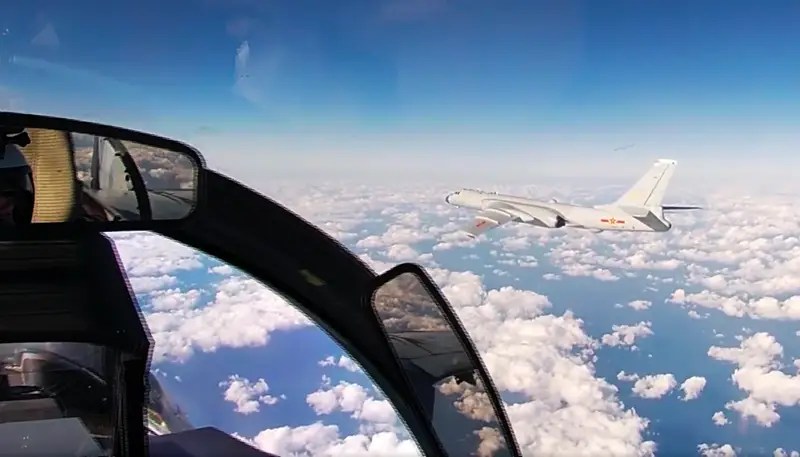
With so much attention directed at Ukraine, the much bigger strategic threat posed by China has largely flown under the radar. China has increasingly made it clear its intent to take back Taiwan. Along with ratcheting up its rhetoric, it has taken increasingly provocative overt actions, including holding naval war games not far from the island and flying hundreds of military sorties over the course of recent months, including by fighter jets, H-6 strategic bombers, intelligence-gathering aircraft, and air freighters, into Taiwan’s air defense identification zone. And just last Friday, Jan. 28, China’s ambassador to the U.S. warned that Taiwan’s continued push for independence would “most likely” lead to military conflict between the U.S. and China.

“If the Taiwanese authorities, emboldened by the United States, keep going down the road to independence, it most likely will involve China and the United States, the two big countries, in a military conflict,” Ambassador Qin Gang told National Public Radio.

Keep in mind, as I’ve discussed in this space before in my reviews of the novels 2034 and Ghost Fleet, every simulation of conflict between those two “big countries” run in recent years shows China handing the U.S. its ass on a platter. This is not encouraging, even less so if the U.S. is pulled into a global two-front war, for which it is not prepared.

Especially given the controversy swirling around the Olympics, now under way, with Putin and XI shoulder to shoulder in Beijing, I tend to believe that any conflict, either in Ukraine or Taiwan, is unlikely to begin until after the Olympics. Of course the Olympics didn’t stop Putin from invading Georgia on the very eve of the 2008 Beijing Summer Olympics or taking Crimea from Ukraine shortly after the 2014 winter games, held in Sochi, Russia, or planning cyber attacks to disrupt the postponed 2020 Tokyo Olympics. China has denied U.S. claims that Xi asked Putin in December not to invade Ukraine during the current Beijing Olympics, and given the growing affinity between the former rivals Putin may not wish to take any glory away from Xi. But that doesn’t preclude action immediately after the games.

A Dangerous New Reality

Regardless whether the Nightmare Scenario I postulated plays out or not, it is clear we’ve entered into a new and dangerous reality. We can expect to see growing coordination between China and Russia, and especially expanding Chinese economic and political influence and presence on a global scale. We’re already seeing its stifling influence on American corporations, universities, sports leagues, and other institutions, the culmination of a process more than three decades in the making.

Meanwhile, Biden’s green lighting of the Nord Stream 2 pipeline, to carry Russian gas to Germany under the Baltic Sea, makes Germany dependent on Russia for a major source of energy, enabling Putin’s threat in Eastern Europe to drive a wedge between NATO allies. And, if all that is not worrisome enough, we have a world-class grifter in the White House thoroughly bought off and compromised to China.

It is hard to imagine a more dangerous and precarious time than the one into which we’ve entered.

Featured image: A Chinese H-6K bomber is seen from a Russian aircraft during a joint patrol over the Western Pacific, Dec. 22, 2020. Russian Defense Ministry Press Service via Associated Press. Used under Fair Use.

Russian tanks on the move in Belarus. Copyright Russian Defense Ministry Press Service via Associated Press. Photo taken from video and released by the Russian Defense Ministry Press Service on Wednesday, Feb. 2, 2022. Used under Fair Use.

Chinese Navy conducts live-fire exercises in waters near Zhoushan Islands north of Taiwan, August 2020. Associated Press. Used under Fair Use.

This piece also appears on my Substack, Issues That Matter. Subscribe here, and there, and share the piece.